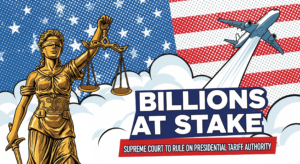
The U.S. Supreme Court will rule on a major case about tariffs, or foreign goods taxes. The case involves international trade and presidential authority. The court accepted the case in a matter of weeks. They will receive written briefs on October 30 and hear arguments in early November. It is thus one of the most important legal fights of the second term of the incumbent administration.
The central question is: Is a 1977 statute, the International Emergency Economic Powers Act (IEEPA), authorizing a president to unilaterally impose tariffs on items in the event of a national emergency? The statute was meant to allow the president to control economic transactions under an emergency.
How the Case Reached the Supreme Court
Lower courts have already heard this case and they all said the administration was not in a position to apply this law to impose tariffs.
- The Court of International Trade (CIT): This court declared the president’s tariffs to be “beyond his legal power.” The court decided that the law informs the president that he may “control” imports, but it doesn’t contain the words “tariffs” or “duties.” The court decided that Congress aimed to limit the president’s power with this law, not enlarge it.
- The Federal Circuit Court of Appeals: The administration appealed, but the appeals court agreed with the trial court in a 7-4 ruling. They informed us that not finding the word “tariffs” in this law was a major problem. They also said that the administration’s plan would violate a precedent called the “major questions doctrine,” which states that significant steps need explicit permission from Congress. But this court stayed its decision temporarily, so the tariffs were in place while the case was taken to the Supreme Court by the government.
Why This Case Matters
The Supreme Court’s decision will have huge ramifications on the United States economy and the power of the president.
- Money Matters: The tariffs have raised billions of dollars. If the Supreme Court goes along with the lower courts, the government may be required to refund all the money. That could take a tremendous bite out of the country’s budget. But if the court rules with the administration, the tariffs likely will stay in place.
- Who Has the Power?: This is a direct threat to the idea that power in the U.S. government is divided. The U.S. Constitution gives Congress the right to “lay and collect Taxes, Duties, Imposts and Excises.” The parties that are suing the government, and they are businesses and states, say that the president is taking power that is reserved for Congress. The government argues that the IEEPA law gives the president the power required to protect national security and the economy in a time of crisis.
How Much Power the President Will Have
The court decision will decide the level of the president’s authority in an emergency and set a precedent for future presidents.
What Companies Can Do Now
While the case is being considered, the tariffs are still active. Companies should:
- Continue Paying Tariffs: Companies must continue paying the tariffs so they can avoid a fine until the Supreme Court finally makes a decision.
- File Objections: This is important in order to get a refund down the line. By filing objections to the tariffs officially with U.S. Customs and Border Protection, importers create an official record of their objection. This paperwork will be valuable in getting a refund when the Supreme Court strikes down the tariffs.
The November debates will set the stage for one of the Supreme Court’s most important rulings of the year. The ruling will settle the future of billions of dollars of tariffs and control of political power in the federal government.